David Hudson & the Origins of ORME
David Radius Hudson is widely associated with the term Orbitally Rearranged Monoatomic Elements (ORME) and with bringing broader attention to the concept during the 1990s.
His work explored unusual observations involving precious metals and sparked continued interest in what later became commonly discussed as ORME, ORMUS, and monatomic elements.
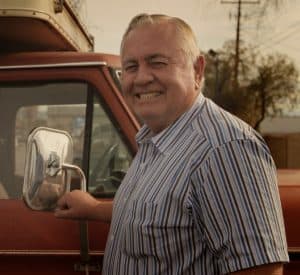
The David Hudson Foundation Story
Our story begins in the agricultural fields of Arizona, where an unexpected soil problem set David Radius Hudson on a path that would shape the future of Monatomic ORME.
During the 1970s, David was managing farmland affected by high concentrations of sodium. The condition, commonly known as black alkali, created a hard surface that resisted water and made cultivation increasingly difficult.
David began treating the soil with sulfuric acid as part of the reclamation process. During that work, he encountered a material that behaved differently from the familiar elements identified through routine testing. What started as an agricultural problem soon became a much larger investigation involving chemistry, metallurgy and materials science.
The Arizona Research
David approached the problem with persistence and curiosity.
Early assays identified familiar materials such as iron, silica and aluminum, but the results did not account for everything recovered from the soil. David began consulting laboratories, chemists and specialists who could help him investigate the unidentified portion.
A major turning point came through emission spectroscopy. Standard testing exposed a sample to energy for a relatively short period. When the testing period was extended, additional spectral lines began to appear. These later results directed David's attention toward transition metals and elements in the platinum group, including rhodium, iridium, palladium and platinum.
David expanded his research into chemical separation, infrared analysis and thermogravimetric testing. He studied the way the material responded to heat, changes in atmosphere and different stages of chemical preparation.
Over time, he developed a framework for understanding precious and transition metals in a highly dispersed, non-metallic form. He called these materials Orbitally Rearranged Monoatomic Elements, or ORMEs.
This language became the foundation for a new field of experimentation. It also provided a bridge between the metallurgical processes David was studying and the older alchemical traditions that had explored the transformation and refinement of matter.
Creating a Formal Record
In 1988, David began formalizing his work through a family of patent applications.
The filings named David Radius Hudson as the inventor and Concord Research Corporation as the original assignee. The patent described separated, substantially pure, stable and non-metallic monoatomic forms of selected transition and precious-metal elements.
Related filings appeared in Belgium, Britain, France, Germany, Italy, Japan and several other countries. The patent record established the terminology, chemical procedures and analytical characteristics that David had developed through years of experimentation.
By the mid-1990s, David was presenting his work publicly. His lectures brought together agriculture, analytical chemistry, metallurgy, superconductivity and historical alchemy.
The presentations introduced a wider audience to the ORME concept and documented the path from an Arizona soil problem to an entirely new approach to precious-metal preparation.
Meeting Mike Alexander
Around the year 2000, David connected with Canadian entrepreneur Mike Alexander.
The meeting marked the beginning of a relationship that would carry David's work into its next generation.
Mike spent close to a decade under David's tutelage. During that time, they traveled together, studied materials, examined emerging technologies and worked through the practical details of David's original process.
David brought decades of experimentation and accumulated knowledge. Mike brought an entrepreneurial perspective and a strong interest in turning a complex process into a consistent modern operation.
Their work focused on identifying the essential stages of David's method and understanding how each variable affected the finished material. They examined preparation sequences, material composition, temperature, field exposure, containment and storage.
The relationship became the bridge between David's original Arizona research and the Canadian production system that followed.
The John Searl Chapter
One of the most influential chapters in David and Mike's work together was their time with British inventor John Searl.
Searl was known for developing the Searl Effect Generator, commonly called the SEG. The system used concentric magnetic rings surrounded by cylindrical magnetic rollers. The rollers were designed to rotate on their axes while traveling around the larger stationary rings.
The SEG brought together magnetic-field geometry, specialized material compositions, precisely arranged magnetic patterns and carefully controlled manufacturing stages.
David and Mike spent significant time with Searl exploring his magnetic research. The experience expanded their understanding of how material composition and electromagnetic environments could be considered together.
The work emphasized the importance of exact proportions, uniform batches, controlled field patterns and carefully ordered production stages. It also demonstrated how small differences in geometry, spacing, temperature, containment and handling could influence the behavior of a system.
These lessons became an important part of the evolution of Monatomic ORME.
Magnetic research encouraged David and Mike to look beyond the creation of the material and examine the conditions surrounding it. Their attention expanded to include field exposure, environmental conditions, processing equipment, storage containers and packaging methods.
The high-spin state became central to how they thought about preparation and preservation. Maintaining the desired condition required attention throughout the complete production cycle, from the selection of raw materials to the sealing of the finished product.
The Searl chapter helped transform the work from a sequence of chemical steps into a complete production philosophy. Materials, energy, environment and handling were treated as connected parts of a single process.
Carrying the Work into Canada
After years of working and traveling with David, Mike assumed responsibility for carrying the Monatomic ORME operation forward.
Under Mike Alexander's leadership, the Monatomic ORME brand was relaunched in 2011. Production moved into Canadian facilities, where David's historical alchemical process was adapted through a modern metallurgical approach.
The new operation focused on controlled inputs, defined production stages, cleaner handling and improved batch consistency. Each step was developed to preserve the character of David's original formula while creating a process suitable for modern production.
Ionized water became part of the preparation system. Vacuum-assisted handling and sealed packaging were introduced to reduce unnecessary environmental exposure and support greater product stability.
These developments improved concentration, consistency and preservation while allowing the process to be repeated across production batches.
A Continuation of David's Work
The Monatomic ORME operation that exists today is the continuation of David Hudson's work.
Its foundation remains rooted in the questions David first began asking in Arizona.
- What was present in the material that routine analysis did not identify?
- How could it be separated?
- How could the preparation be repeated?
- Which variables affected its condition?
- How could the material be protected after production?
Mike carried these questions into a modern Canadian production environment. His years with David supplied the historical and practical foundation. Their time with John Searl introduced a deeper focus on magnetic-field relationships, material uniformity and controlled processing.
Canadian production facilities provided the setting where these ideas could be brought together into a consistent operating method.
From Discovery to Development
The history of Monatomic ORME can be understood through two connected periods.
The first was David Hudson's period of discovery and investigation. It began with Arizona soil and grew through chemical separation, spectroscopy, thermal analysis, patent filings and public lectures.
The second was Mike Alexander's period of continuation and development. It included nearly a decade of tutelage, international travel, magnetic research with John Searl and the transformation of David's original process into a modern Canadian operation.
David created the foundation.
Mike carried it forward.
Together, their work connected agriculture, metallurgy, alchemy and magnetic research in a continuing effort to understand and refine an extraordinary material.
The Monatomic ORME Legacy
David Hudson's role in the Monatomic ORME story is foundational. His persistence, experimentation and original process created the body of work from which the company developed.
Mike Alexander's role has been to preserve that foundation while advancing its production methods. His leadership brought the operation to Canada, introduced modern process controls and established the company that carries the Monatomic ORME name today.
The journey began with an agricultural challenge in Arizona. It continued through years of laboratory work, international travel and magnetic research. In 2011, it entered a new chapter under Mike's leadership.
That chapter continues today.
Monatomic ORME remains rooted in David Hudson's original work, shaped by the research experiences David and Mike shared, and carried forward through Mike Alexander's commitment to preserving and developing the process.
Explore Monatomic Elements
Our Monatomic collection provides information about available elements, formulations, and product formats in a straightforward way.
Product information should be evaluated based on its composition, format, preparation, and labeling, rather than historical, spiritual, medical, or extraordinary claims associated with earlier ORME literature.
Learn More About Our Monatomic Collection
Explore our Monatomic products to compare available elements and choose between liquid and powder formulations.